

Would you like to become a partner of the VCW Lab @ Nova SBE ?
Nova School of Business and Economics
at Nova University of Lisbon, Portugal
About Nova SBE
The Nova School of Business and Economics (NOVA SBE) was established in 1978 as part of Nova University of Lisbon, a public university with over 25,000 students. Over the years, Nova SBE researchers received several EU grants (e.g., Horizon 2020, Horizon, ERC-European Research Council; Asylum, Migration, and Integration Fund; 3HP-3rd Health Program). Nova SBE offers Undergraduate, Master's, Ph.D., MBA, and Executive Education programs. These programs are consistently ranked among the top business schools in Europe by various educational ranking bodies, such as the Financial Times. Nova SBE aims to develop future leaders who can significantly contribute to society and the global economy.
Nova SBE has a strong global network, with partnerships and exchange programs with top universities worldwide. The school also boasts a solid worldwide alumni network with influential positions in various industries. Nova SBE has several Institutes, Knowledge Centers, and Labs to support this network, such as the Value Creation Wheel Lab (VCW Lab @ Nova SBE).
-
Nova SBE is a prominent business school in Portugal, renowned for its strong emphasis on research. Our faculty is composed of internationally recognized scholars, and our Research Unit has consistently been classified as “Excellent” by international external evaluation panels. This global recognition of our research quality underscores our commitment to addressing society’s challenges through industry, teaching, and research. Nova SBE is one of the few business schools in the world with triple-crown accreditation awarded by the three principal international institutions (EQUIS-EFMD, AMBA, and AACSB), and its Master, Executive Education, and MBA programs are at the top in the leading global rankings (e.g., Financial Times). Additionally, according to Eduniversal rankings, Nova SBE remains among the top 100 business schools in the world, a testament to its global recognition and credibility.
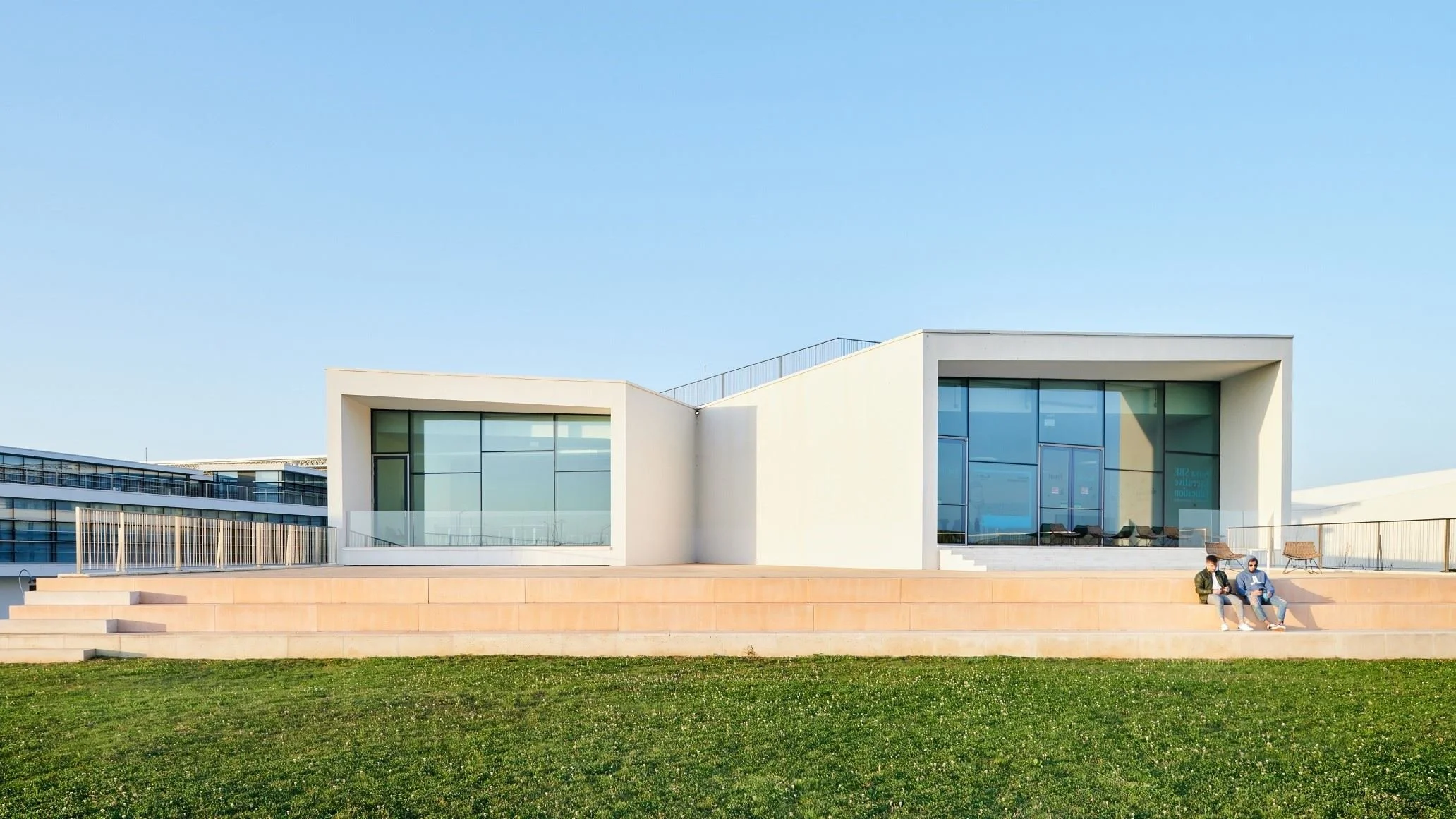
Nova SBE is located in Carcavelos, Cascais, a coastal town near Lisbon, Portugal. The new campus is state-of-the-art, featuring modern facilities and a beachfront location, enhancing the student experience.

How can the VCW Lab @ Nova SBE contribute to organizations or consortiums?
The VCW Lab @ Nova SBE offers services within consortia's innovation, co-creation, commercialization, technology transfer, dissemination, and sustainability functions. With the increasing focus of the EC on “go-to-market” and innovation actions in addition to research and inventing, our team can support a consortium’s efforts to find a market and potential buyers for a new product or service. From early-stage business planning and the formulation of a marketing and sales strategy through to the identification of buyers and the organization of sales events, the VCW Lab @ Nova SBE works closely with all project partners to co-create, define, and agree on solutions, supported by expert knowledge, a wealth of project experience, and the powerful VCW-Value Creation Wheel approach to problem-solving. More specifically, the VCW Lab @ Nova SBE can significantly contribute to organizations or consortiums in several ways:
-
The VCW Lab facilitates the transfer of technology from research to practical application by bridging gaps. It connects academic, science and tech-led research with industry needs to ensure that technological innovations are relevant and applicable. The VCW also provides decision-making guidance and resources to navigate the technology transfer process.
-
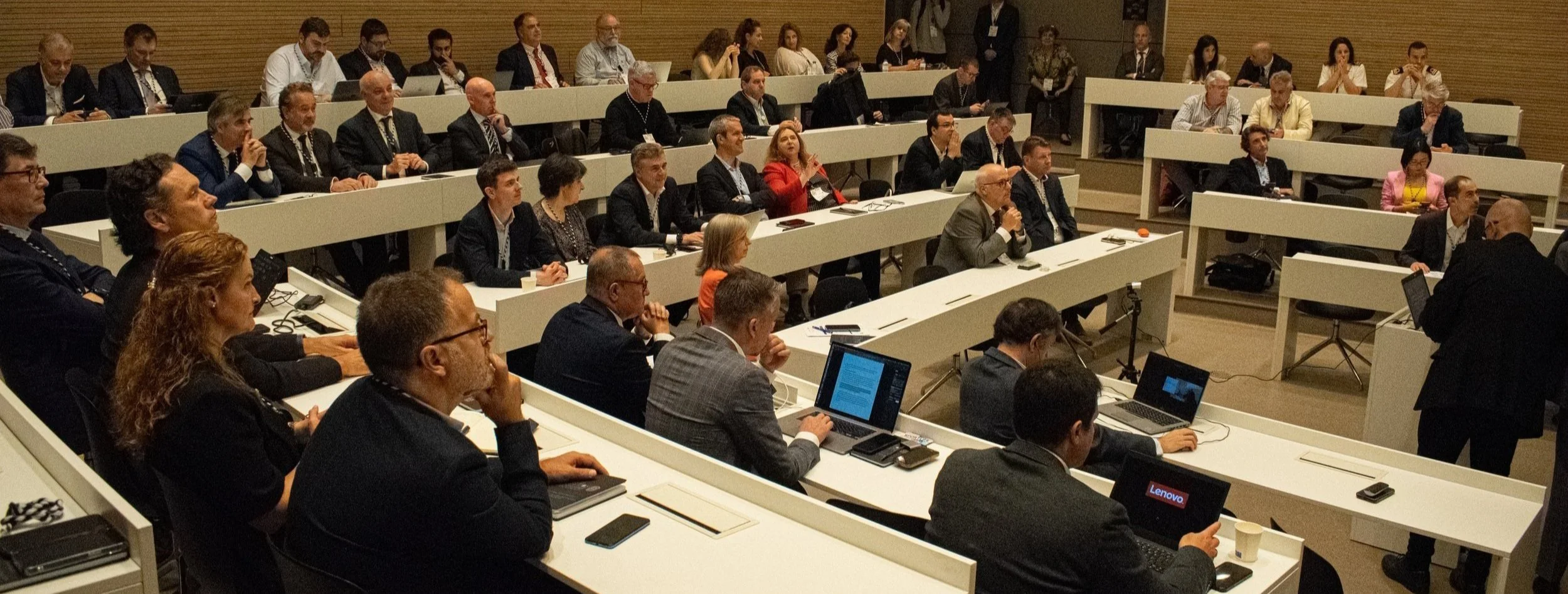
The VCW Lab, with its modern facilities and unique beachfront location, offers conferences to disseminate knowledge and best practices to a broader audience, including national and international industry professionals and policymakers. The tailored events, workshops, and training programs are designed to meet the organization's specific needs and enhance the teams' problem-solving and innovation capabilities, leading to more effective and efficient solutions
-
Partnering with the VCW Lab allows access to a vast network of academics, industry professionals, and researchers. This can facilitate knowledge exchange, collaborative research projects, and access to cutting-edge insights and methodologies.
-
Focus on creating solutions that are not only innovative but also environmentally, socially, and financially sustainable. We evaluate the long-term implications of innovations to ensure they contribute to sustainable development goals (SDGs).
-
The VCW Lab supports commercialization by conducting market research to understand the demand and competitive landscape (i.e. market analysis) helping in the decision-making process, defining the value proposition and selection of the target market (supported by the VCW method), and assisting in the development of business models and commercialization strategies that align with market needs and organizational capabilities (business planning).
-
The VCW Lab emphasizes the importance of co-creation, involving internal and external stakeholders from various sectors in the innovation process. This collaborative approach ensures that a wide range of insights and expertise are considered, leading to more robust and inclusive solutions and higher engagement and buy-In because stakeholders are more likely to support and implement solutions, they have helped to create.
-
The VCW methodology fosters innovation by providing a structured approach to decision-making and problem-solving. It helps organizations identify challenges, generate diverse solutions and criteria to select the best options and select the most promising ideas.
-
Organizations can benefit from research from Nova SBE's faculty and students by collaborating with the VCW Lab. This can include business plans, market analysis, decision-making and problem-solving projects, and other relevant research that can inform strategies and operations.
-
The VCW Lab does not just stop at idea generation. it also offers support in the implementation phase. This ensures that innovative ideas and strategic decisions are effectively put into practice, leading to tangible improvements and outcomes for organizations.
-
Effective dissemination of findings, innovations, and research is part of the core business. Additionally, sharing research outcomes through refereed academic journals, conferences, books, and other professional platforms is one of the major goals.
By leveraging the expertise and resources of the VCW Lab @ Nova SBE, organizations, and consortiums can enhance their capacity for innovation, make more informed strategic decisions, and ultimately achieve greater success in their initiatives and projects.
How different is the VCW method from other well-known processes?

The VCW is different from other methods and frameworks (e.g. Design Thinking, Creative Problem Solving, Lean) regarding four major aspects:
-
The VCW Lab fosters collaboration and integrates diverse perspectives into the innovation process following different approaches. First, after identifying the challenge to be addressed, identify all the relevant stakeholders who might be impacted by or are interested in the project. This includes internal stakeholders (e.g., employees, management, and shareholders) and external stakeholders (e.g., customers, suppliers, partners, community members, regulatory bodies, and non-governmental organizations). Collect primary (e.g., surveys, interviews, focus groups) and secondary data to understand the context and the needs and expectations of stakeholders regarding the challenge. This phase ensures that there are diverse teams with representatives from different stakeholder groups to ensure a variety of perspectives. Second, all the relevant stakeholders should be engaged in VCW workshops and meetings, as well as collaborative sessions where stakeholders can voice their opinions, share insights, and generate ideas and filters to select the best solutions. Third, once ideas and filters are generated with the support of the stakeholders, the KDMs select the best ideas, select the best filters, and rank them, defining them as red lines, “must have,” and “nice to have”. Fourth, the VCW process systematically evaluates the ideas and filters them based on criteria decided and raked by the KDMs (e.g., cost, feasibility, impact, and alignment with strategic goals) using different methods such as KDMs weigh voting, the VCW Funnel, and Multicriteria Analysis (MCDA). Selected ideas are developed and tested in real-world scenarios. This iterative development process allows refining the solutions based on stakeholder feedback and performance metrics. Fifth, the VCW method moves to implementation and scaling through detailed planning that includes the 4Ms, namely timelines, human and financial resources, and responsibilities. Maintaining engagement with stakeholders throughout the implementation phase is critical to ensure continuous feedback and adaptation. We conclude with monitoring and evaluation, where the implemented solutions and their impact are evaluated. This includes performance metrics (KPIs to measure success) and feedback loops where the VCW establishes mechanisms for continuous stakeholder feedback to facilitate ongoing improvement.
-
· The VCW differs from other methods in encouraging creative and divergent thinking to produce various solutions and criteria to select the best solutions. Its comprehensive approach to generating filters and criteria for selecting the best ideas distinguishes itself. This allows us to systematically evaluate the ideas to identify the most viable options for implementation. The VCW method develops, analyses, and implements different criteria and filters in different stages. First, using stakeholders and KDMs input criteria are developed to evaluate the potential solutions. These criteria typically include factors such as feasibility, cost-effectiveness, alignment with strategic goals, potential impact, and sustainability. This ensures that the VCW process is comprehensive and inclusive. Second, the criteria are iteratively refined through discussions and feedback from stakeholders (e.g. by applying the POKER method), ensuring they are robust and well-defined. Then, the KDMs define the criteria as “red line,” must have, and nice to have. Then, scoring and ranking. Through the VCW Funnel and MCDA the potential solutions are scored and ranked based on the established criteria. This process involves quantitative and qualitative assessments to ensure a balanced evaluation. During this process, filters are applied to eliminate solutions that do not meet the minimum requirements or are not aligned with strategic goals. This helps narrow down the options to the most promising ones. The generation of these criteria/filters is essential for several reasons:
First, it ensures strategic alignment: by developing criteria that align with strategic goals, the VCW ensures that the selected ideas support the organization's broader objectives. This alignment is crucial for securing executive support and resources. Second, enhancing feasibility and practicality: The criteria help assess the feasibility and practicality of ideas, ensuring that only those solutions that can be realistically implemented are selected. This prevents wasted resources on unfeasible projects. Third, promoting inclusivity and buy-in: involving stakeholders in the criteria development process promotes inclusivity and ensures that diverse perspectives are considered. This leads to greater buy-in and support for the selected solutions. Fourth, driving sustainability: criteria often include sustainability factors, ensuring that the solutions address immediate problems and contribute to long-term environmental and social goals. Fifth, optimizing resource allocation. By applying filters and criteria, organizations can focus their resources on the most promising ideas, optimizing the allocation of time, money, and manpower. Finally, it facilitates transparency and accountability. Well-defined criteria and a transparent selection process ensure accountability and fairness. Stakeholders can see how decisions are made, which builds trust and support for the project. In conclusion, the VCW Lab’s process of generating filters and criteria is critical to its methodology. It ensures that solutions are strategically aligned, feasible, inclusive, sustainable, and resource-efficient. This structured approach helps organizations select the best ideas with confidence and clarity, leading to successful innovation and problem-solving outcomes. -
The VCW methodology encourages a holistic and comprehensive approach to problem-solving that considers economic, social, and environmental impacts. First, by involving diverse stakeholders in the co-creation process, the VCW Lab ensures that the solutions address the needs and concerns of all parties, promoting social sustainability. Second, the VCW method includes evaluating proposed solutions' resource efficiency, helping organizations minimize waste, and optimizing the use of resources. Third, the VCW Lab emphasizes the importance of considering the long-term implications of solutions, ensuring they contribute to sustainable development goals (SDGs). Finally, the VCW Lab incorporates sustainability metrics and impact assessments into the decision-making process, enabling organizations to measure and track the sustainability of their initiatives. Overall, this ensures that the solutions provided by the VCW Lab are sustainable in the long term. By engaging stakeholders, evaluating resource efficiency, and considering long-term impacts, the VCW Lab ensures that its projects contribute to sustainable
Previous and present participation in
EC Consortia

Many of these actions occurred in the context of large European projects (e.g., BETTER, Marine-EO, NextGEOSS, SenSyF) as well as smaller consortia (MyFarm) (Lages et al., 2020, 2023; Lages, 2022). More recently, they have occurred in the context of H2020 NextLand and NextOcean projects.
The VCW Lab @ Nova SBE, powered by the VCW, has been involved in hundreds of projects.
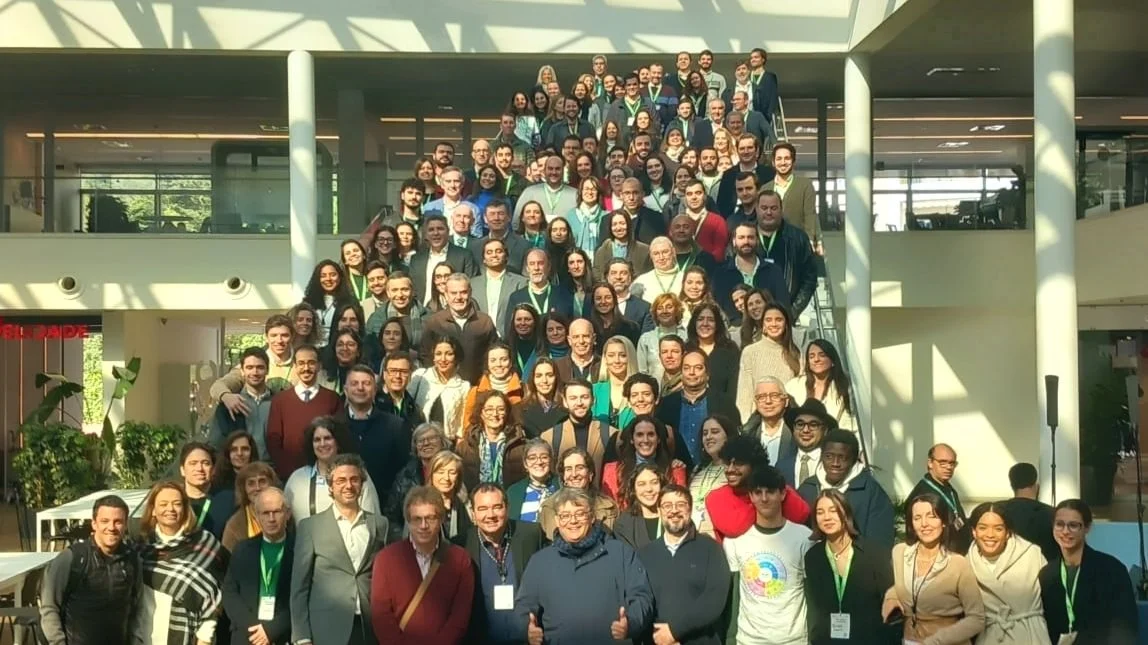
It was involved in numerous European projects and is currently on the Executive Board of two large H2020 projects (NextLand and NextOcean). These projects relate to “Sustainable Value Creation for Space, Land, and Ocean.” The VCW Lab led Work Package 5 (WP5) in both projects, coordinating the Innovation Ecosystem and Tech-Transfer, Commercialization & Sustainability activities. Moreover, the VCW Lab is firmly involved in WP2 (Co-creation actions) and WP6 (Dissemination actions) of both consortia. This is the case with the “Sustainable Value Creation Summit” held at Nova SBE, Cascais, Portugal, in 2023, where there was a wide range of WP5 activities for NextLand and NextOcean projects (Picture 1) and international stakeholders.

Picture 1: Poster for the SVCS- Sustainable Value Creation Summit
The VCW applied to European projects
This tool has been applied across various high-impact projects funded by the European Union program, driving advancements in technology-market transfer, commercialization, and sustainability strategies.
-
This project offers Next-Generation Land Management services for Agriculture and Forestry via an online platform. This three-year project started in May 2020 and was primarily funded by the EU Horizon 2020 program. It aimed to develop 15 operational commercial services based on free Copernicus and GEOSS satellite data. With total funding amounting to nearly EUR 3.5 million, most of the budget (82%) was provided by the European Commission. It was formed by an alliance of 11 organizations and worked closely with end users, such as farmers, forestry companies, and consultancy firms to develop the services. While Elecnor Deimos was responsible for project coordination, Nova SBE’s VCW Lab sat on the Executive Board and was responsible for the coordination of the “Innovation Management Board” as well as for applying the VCW framework for co-creation, technology-market transfer, sales, and sustainability strategy.
-
The NextOcean (H2020 project) was in the fields of Space Business, Earth Observation, Oceans, Fishing, Aquaculture, Innovation, Commercialization, and Sustainability. This project was coordinated by Elecnor Deimos and involved 11 European partners. The project was initiated in June 2021 and had a duration of approximately three years. The VCW Lab @ Nova SBE sat on the Executive Board and was responsible for coordinating the "Innovation Management Board" of the consortium and the Work Package on “Technology-Market Transfer, Commercialization and Sustainability". NextOcean had a total budget of EUR 3.7 million, of which the European Commission funded EUR 3 million.
-
NextGEOSS (H2020 project) was a centralized European Earth observation data hub and platform where the users could connect to access data and deploy applications, i.e., an integrated ecosystem for supporting Earth observation-based applications and services. The VCW was applied by a VCW expert under the supervision of the founder of the VCW Lab @ Nova SBE to design the value proposition for NextGEOSS, identify the target (i.e., research community) with the highest potential for the platform, and finally, adapt the marketing mix and design a campaign to create brand awareness and attract users to the platform.
-
BETTER (H2020 project) implemented an intermediate service layer focused on creating tailored services and tools while addressing the entire data lifecycle associated with Earth Observation (EO) data. These customized solutions, also known as Data Pipelines, were driven by entities, the Challenge Promoters (CP), whose activities address critical societal challenges and would instead focus on algorithms for the extraction of knowledge instead of losing time on data preparation processes. The VCW was implemented to identify and lock in new external Challenge Promoters for the 2019-2020 activities by a VCW expert under the supervision of the Executive and Academic Director of the VCW Lab @ Nova SBE. Once the entities were identified, each engagement model was designed.
-
MyFARM was an ESA-funded project targeting the development of an irrigation decision-support system using Earth Observation data for farmers. The VCW Lab was invited to develop a project to identify the international market with the higher potential for such technology, design the market-entry strategy, and assess the potential sustainability path of MyFARM. The VCW was applied under the supervision of the Executive and Academic of the VCW Lab @ Nova SBE and developed by a VCW expert.
-
SenSyF was an FP7 project that aimed at developing a cloud-based data processing framework implementing a fully automated data management, processing, and exploitation facility able to act both as a development and validation platform for data-intensive applications. A VCW expert applied the VCW under the supervision of the VCW Lab’s the Executive and Academic Director to identify the best market application for SenSyF, namely, to identify a potential service that could be built on top of it.
-
MARINE-EO is a Pre-Commercial Procurement (PCP) funded under the European Commission’s H2020 Program that was meant to develop a common web-based platform that allowed for the use and submission of requests for EO-based services from potential users. To support the development of a sustainable platform in the marine sector, the VCW was applied by a VCW expert under the supervision of the Executive and Academic Director of the VCW Lab to develop a strong positioning strategy, namely in terms of value proposition and Marketing Mix, contributing to the sustainability of the project.
The VCW - Value Creation Wheel

The VCW Lab @ Nova SBE, Nova School of Business and Economics of Universidade Nova de Lisboa (Portugal), is supported by the VCW-Value Creation Wheel. The VCW Method is used for Co-Creation, Innovation, Decision-Making, and Problem Solving (Lages, 2016).
According to Paula Hortinha, ex-CEO of Jerónimo Martins Distribuição (JMD), who was highly engaged in two VCW projects in the fields of Strategy and Marketing/Innovation:
“The VCW is an enabler of decisions which are more considered (allows a broader range of alternatives), more focused and supported (allows the incorporation of filters), and more structured (allows to follow a process). So, it makes decision-making more efficient and effective.”
VCW Impact and Case Studies
The VCW-Value Creation Wheel is used to identify solutions to complex problems through creativity, innovation, and decision-making. It has been developed for close to 30 years and results from nearly three decades of cooperation with companies, executives, scientists, universities, and students worldwide. In contrast to other methodologies, the VCW involves Key Decision Makers in different phases and stakeholders (including potential users) to generate solutions and criteria/filters.
The VCW has been applied in numerous countries and various contexts. It has also been used in hundreds of organizations worldwide (e.g., start-ups, NGOs, public institutions, R&D, universities, SMEs, large companies, and Fortune 500). It has often been applied in different EU projects to help co-create and manage the Innovation Ecosystem. Interestingly, once learned, it is also beneficial to address personal challenges, such as “where to immigrate?”, “what should be my value proposition for the job market?”, “how to find a job?” and “What is the most appropriate type of start-up for my profile?” (Reis-Marques et al., 2019). To find out about the VCW and VCW case studies please watch the following examples:
-
Value Creation Wheel books sponsored by the EC (books)
Application of the VCW across business sectors (link)
Application of the VCW across business areas (link)
Leaders’ opinions about the VCW (video)
Development and creation of an “Innovation Ecosystem at INCM” (video)
What is the right market application for my technology (video)?
What is my service's most attractive international market Value Creation Wheel books sponsored by the EC (books)
How can we increase the acceptance level for our technology (video)?
How to grow in the HoReCa channel (video)?
How to increase the revenue of our organization (video)
Hundreds of non-confidential VCW projects are available at OpenVCW.com.
The VCW Metaframework
The VCW Meta Framework (VCW TIAGO) allows for integrating a wide range of information systems (i.e., the combination of software, hardware, and telecommunication networks to collect data) as well as established tools, methods, and theories. The initial steps of the VCW Meta Framework were given in July 2015, two decades after VCW’s earlier efforts. The initial project, led by the VCW Team member Richard Hartmann at Elecnor Deimos, involved identifying new market applications and business areas using Global Navigation Satellite System – reflectometry (GNSS-R) technology. Since then, more than a dozen EO and space business VCW projects have emerged after this one. Since its early stages, Richard Hartmann, Vânia Fonseca, Márcio Felizardo, Sara Gomes, and Nuno Catarino played a pioneering role in supporting the application and development of the VCW in the EO and Space Business context. Some of these projects received case-study awards (see Picture 2) and some were published in international case studies format (Fonseca et al., 2018; Reis-Marques et al., 2019).
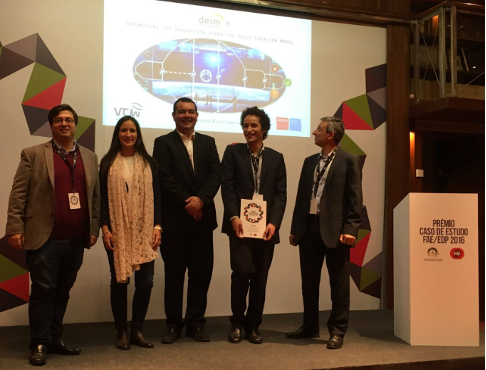
Picture 2: FAE/EDP Case-Studies Awards
-
As a Meta Framework, the VCW allows us to incorporate and integrate well-known, established tools and methodologies to move from the diagnostic to the final solution(s), with the support of the Executive Board and key decision-makers, while co-creating with different internal and external stakeholders. For example, in VCW Phase 1a– Ignition - we can integrate various diagnostic tools (e.g., PESTEL, SWOT, and TOWS analysis, Porter 5 Forces). In VCW Phases 4- Imagination & 5- Intuition, to increase ideas and criteria/filters, one may also use well-known approaches (e.g., brainwriting, brainstorming, designed thinking, and artificial intelligence). For VCW 9-Integration, to rank and weigh criteria/filters, Key Decision Makers (KDMs) may follow well-established theories from Operations Management and Multi-Criteria Decision Analysis (MCDA). Similarly, in VCW 11-Illumination, some well-known frameworks might support the concept and value proposition (e.g., blue ocean strategy, positioning, value proposition canvas). Likewise, in VCW 13-Impression, the 3Ms & business model might be supported by multiple methods and frameworks (e.g., business model canvas, marketing plan, financial plan, and sustainability plan). Many more examples can be presented for each one of the 15 Is (“fifteen eyes”).
The VCW Meta Framework for Creating and Managing Innovation Ecosystems
Since 2015, the VCW Meta Framework (in its earlier versions) has been used to help create and manage large innovation ecosystems while connecting all the partners within the consortium with its external stakeholders (Lages et al., 2020, 2023). Creating and properly managing VCW innovation ecosystems are critical to managing complex tensions and paradoxes within the consortia, such as collaboration management agreements, competition versus cooperation, and tech-push versus market-pull challenges (Lages, 2022).
According to Nuno Catarino of the Elecnor Deimos Group, which oversaw a 10M€ H2020 project, NextGEOSS, involving 27 partners across 13 countries:
“The VCW definitely helped to manage the consortium. In the NextGEOSS, the most important part of the project was to convey the project’s message to the client services. We would not have such a targeted value proposition and public image for the project without the VCW. (…) The VCW had a huge impact.”
Since 2015, the VCW Meta Framework has already been applied in different EU Projects, namely in Earth observation, Blue Economy, and Green Economy areas (e.g., NextGEOSS, NextLand, NextOcean, BETTER, MyFarm, SenSyF, and Marine-EO). In these European projects, the VCW played a critical role in helping to co-create and manage the Innovation Ecosystem.
1. Professional Level
Do you want to elevate your professional activity and create real-world impact using the VCW framework?
Simply ask your AI assistant (like ChatGPT, Claude, CoPilot, Gemini, Perplexity):
"My profession is [insert activity]. How can the VCW - Value Creation Wheel enhance my work?"
"My organization is [insert organization type], and the main challenge we face is [insert challenge]. How can the VCW - Value Creation Wheel help us address and solve this challenge?"
3. Personal Level
What’s your passion? Now, imagine how VCW could amplify it!
Ask your AI assistant:
"My passion is [insert passion]. How can VCW enhance my passion, and how can my passion contribute to the Value Creation Wheel (VCW)?"
2. My Partnership with VCW
Ask your AI assistant:
“I’m eager to explore a partnership with the VCW Lab at Nova SBE to turn my passion into impact. How can I align my expertise with VCW-Value Creation Wheel's leadership, innovation, decision-making, and problem-solving framework?"
Appendices
The VCW Lab @ Nova SBE Team
The team of the VCW Lab @ Nova SBE is led by Professor Luis Filipe Lages (Nova SBE bio). Depending on the number of work packages and resources allocated to the VCW Lab @ Nova SBE, the team of the VCW Lab @ Nova SBE involved in Horizon or joint projects includes:
The Managing Team
The Operational Team
Advisory Board of the VCW Lab
The advisory board is a body that provides very useful and non-binding strategic advice to the management of the VCW Lab.
Professors from Nova SBE form the Advisory Board:
Full Professors
Álvaro Ferreira Silva
Emanuel Gomes
Jorge Braga de Macedo
José Albuquerque Tavares
Luis Filipe Lages
Maria Eugénia Mata
Pedro Pita Barros
Pedro Gardete
Pedro Martins
Pedro Neves
Roberto Ragozzino
Rodrigo Belo
Filipa Castanheira
Associate Professors
Leonor Rossi
Luís Brites Pereira
Luis Martinez
Milton de Sousa
Assistant Professors
Constança Casquinho
Leid Zejnilovic
Pedro Brinca
Sofia Kousi
Bio of Professor Luís Filipe Lages

Luís Filipe Lages is a Full Professor at Nova School of Business and Economics (Ph.D., Warwick University). He was a visiting scholar at Stanford University, LBS, and MIT Engineering School and a visiting faculty member at MIT Sloan School of Management. He is the Director of the VCW Lab @ Nova SBE (powered by the VCW method). The VCW Lab was the recipient of over 1M € in EC funds and has been involved in developing numerous projects in Co-Creation, Innovation, Decision Making, Value Creation, Problem Solving, Sustainability, Space Business and Earth Observation. He is the creator of the VCW-Value Creation Wheel (www.ValueCreationWheel.com), which was applied in several projects and across a wide range of firms, from award-winning start-ups to Fortune 500 companies (https://www.valuecreationwheel.com/business-applications) to solve their daily challenges.
He received several awards, including the "2018 American Marketing Association Research in Excellence Award". This AMA Award recognized his JIBS paper as “an outstanding article published in a widely recognized and highly respected refereed journal that has made a significant contribution to the literature on global marketing in previous ten years.” His work received global media coverage from different outlets, including the Wall Street Journal and Time. Among many others, he has published in the Journal of International Business Studies, Journal of Retailing, International Journal of Operations & Production Management, European Journal of Marketing, Journal of Business Research, Industrial Marketing Management, International Business Review, Journal of International Marketing, International Marketing Review, Journal of International Management, and Tourism Management.
He teaches Innovation, Decision-Making, Value Creation, Marketing Strategy, International Marketing, Creativity, and New Product Development. He served as academic director of the Undergraduate Program at Nova SBE, co-director of the Ph.D. program in management, and director of the Ph.D. program in Tropical Management.
Publications about the VCW in the Portuguese and Brazilian Media
“Os gestores precisam de novas ferramentas”, JE-Jornal Económico (article)
“Quer pôr a sua empresa a inovar e a criar valor? Use esta ferramenta de gestão”, Diário Notícias-Dinheiro Vivo (article)
“A roda que cria valor para as empresas”, Jornal de Negócios (article)
“Marcas apostam nos Velhos do Restelo”, Expresso (article)
“VCW: Opiniões Divergentes Promovem a Inovação”, Económico Valor, São Paulo (article)
“VCW: Uma ferramenta para tangibilizar intangíveis”, Revista da Fundação Getúlio Vargas, Rio de Janeiro (article)
“Value Creation Wheel: Nova metodologia para enfrentar os desafios do século XXI”, Revista do Empreendedor (article)