


VCW for Leadership, Change Management and Decision Making
The VCW is a powerful method for leaders who wish to involve others to gather insights to find reliable and well-supported solutions.
The VCW builds in the power of co-creation and systematizing collective intelligence to help leaders solve a problem/challenge, present the reasoning and find support for the final decisions. For example, the VCW might help the board to make hard financial decisions because it provides them with the reasoning behind their decisions. The VCW provides structured information in a flexible way which is very useful in reducing the risks associated with making resource allocation decisions.
Organizations that recently implemented VCW projects include Aga Khan Foundation, Airbus, Altran, AstraZeneca / Santis, AXA, Bank of Cyprus, Cathay Pacific Airways, Claranet, Cyta-Vodafone, Credit Suisse, Crowne Plaza, Eurocopter/Airbus Helicopters, Eurolife Insurance, Elecnor-Deimos, Everis-NTT Data, Flying Tiger, Forbach city, Four Seasons, GDF Suez, Gemalto, GirlMove, Government of Portuguese National Republic, InvestLisboa, IPO Porto, INCM-Casa da Moeda (Portuguese Mint), Jerónimo Martins, Liga Portugal, Lisbon MBA, Lufthansa Technik, ITER, Healthcare City, Mastercard, Marseille University, McDonald’s, Portuguese Minister of Justice, MIT, Montepio Acredita Portugal, Nova SBE, Nova University of Lisbon, Otis, Piraeus Bank, PJ- Portuguese Criminal Police, Refood, Renova, Rio Tinto Alcan, Santander, Sport Lisboa e Benfica, Thomson Reuters, Uniplaces, UPS, Vienna International Airport, among many others.
Below are some examples of how the VCW was applied in past projects.
NextLand –EO services for sustainable agriculture and forestry
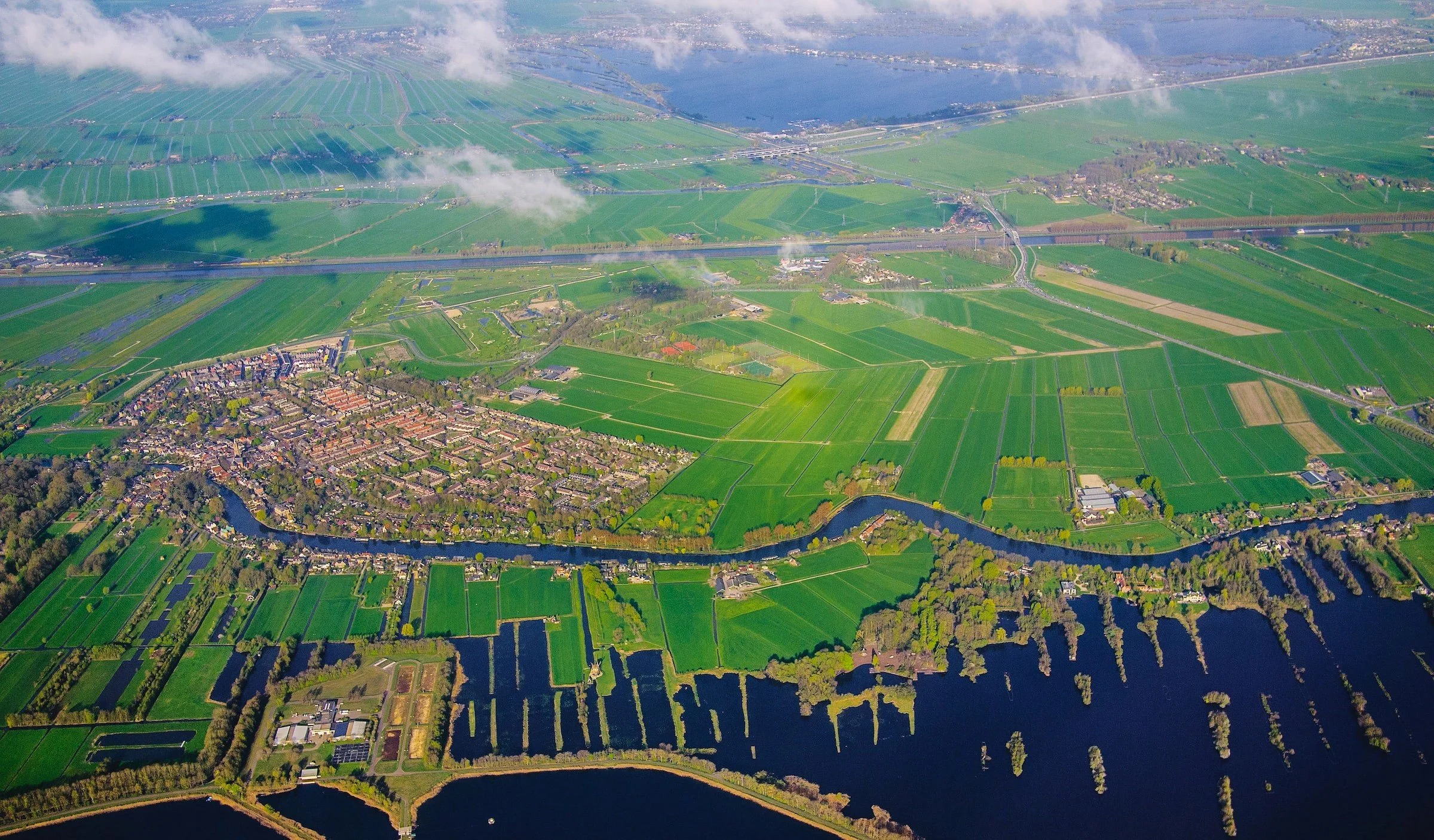
This project offers Next-Generation Land Management services for Agriculture and Forestry via an online platform. This three and half years project started in May 2020 and is largely funded by the EU Horizon 2020 program. It aims to develop 15 operational commercial services based on free Copernicus and GEOSS satellite data. With total funding amounting to nearly EUR 3.5 million, most of the budget (82%) is being provided by the European Commission.
NextLand is formed by an alliance of 11 organizations and works closely with end users, such as farmers, forestry companies, and consultancy firms to develop the services. While Elecnor Deimos is responsible for project coordination, Nova SBE’s VCW Lab sits on the Executive Board and is responsible for the coordination of the “Innovation Management Board” as well as for applying the VCW framework for the technology-market transfer, sales, and sustainability strategy.

NextOcean – EO Services for sustainable fishing and aquaculture
The NextOcean (H2020 project) is in the fields of Space Business, Earth Observation, Oceans, Fishing, Aquaculture, Innovation, Commercialization, and Sustainability. This project is coordinated by Elecnor Deimos and involves 11 European partners. The project was initiated in June 2021 and has a duration of three years.
The VCW Lab @ Nova SBE sits on the Executive Board and is responsible for coordinating the "Innovation Management Board" of the consortium and the Work Package on “Technology-Market Transfer, Commercialization and Sustainability". NextOcean has a total budget of EUR 3.7 million, of which EUR 3 million is funded by the European Commission

SenSyf – Tech Transfer for Earth Observation data
Deimos is a R&D company composed fundamentally by top-engineers that are specialised on the development of technological solutions within the space engineering sector. For many years, the main sources of funding for Deimos were the European Space Agency (ESA) and EUMETSAT. However, in order to receive EU funds, the European Commission is asking from companies to identify the most promising markets for their technologies. This tech-led company is now facing a major challenge: How to bring breakthrough technologies that are in the shelf to the market?
In order to solve this challenge Deimos applies the VCW to identify the market application with the highest potential for SenSyf, a system that has the potential to use earth satellite observation data for a wide range of purposes.
First, it was gathered specific knowledge about the value chain. While building on a cloud computing technology, it was identified the strategic positioning of SenSyf, namely how the solution could be valued by the market, its communication strategy and technological improvements.
Second, in order to obtain the largest number of applications and filters, it was carried out a market research followed by discussions with a wide range of stakeholders. This effort had identified 55 potential new market applications and 49 filters to identify the ideal target market.
On the third stage, the input from the board was critical to purify and identify the applications and rank the filters with the highest potential. Fourth, after the application the Value Creation Funnel, agriculture was identified has the target market and the specifies of the new SenSyfLand service were specified. The project concludes with the definition of the value proposition and respective business plan.
In conclusion, the application of the VCW to SenSyf, allowed Deimos to identify a new service for a raw technology. This process benefited from the input of several critical stakeholders (e.g., customers, public authorities, researchers) who allowed identifying the benefits and obstacles related with the adoption of SenSyf technology in different markets. Finally, the application of the VCW allowed the company to involve different employees into the innovation process and this way contributed to move Deimos’ organizational culture from a tech-push orientation to a more hybrid-one, where it became possible to match tech-push with market-pull perspectives.

INCM – Change management and innovation
The Portuguese Mint (INCM-Imprensa Nacional Casa da Moeda) is probably the oldest manufacturing establishment in the country, operating since the end of the thirteenth century. During the last seven centuries the company had the capability to reinvent itself. In order to address the new challenges of the 21st Century, INCM has applied the VCW build an innovation culture inside the organization.
Moreover, in order to engage different stakeholders in the new innovation ecosystem, the VCW developed a pilot project in partnership with Everis with the goal of finding out how to cut costs while creating value and making this organization more efficient. The pilot project led to the implementation of four new projects.
Nowadays, INCM is using the VCW to address new challenges and as a critical tool to consolidate an innovation culture through the entire organization. INCM’s innovation ecosystem allows involving all the different stakeholders to generate ideas, identify the criteria to evaluate the most pertinent ones, and to present a set of solutions to address the initial challenge.

MyFarm – go-to-market for an Innovative Irrigation System
MyFarm irrigation management system allows maize producers to monitor vegetation’s growth and diseases. In addition, through the use of satellite images, it becomes possible to provide weekly information on the amount of water to be applied by pivot or sprinkler. MyFarm service was provided for free to the Portuguese irrigation association in Vale do Sorraia and their farmers. This service ended in December 2015 because users in the domestic market revealed no interest in paying for this new service. They were conservative and sceptical towards new technologies. As a consequence, Deimos, the owner of this service, decided to apply the VCW to discover what would be the international market with more potential for MyFarm application.
During the application of the VCW methodology, 77 filters were generated to identify the potential markets for MyFarm. The input from several stakeholders allowed generating filters that have never been thought before by this tech-led company. Interviews with the farmers also revealed that many aspects initially ignored had a huge impact on the unsuccessful implementation of the service, such as the use of a technical speech without an emphasis on perceived benefits, the prevalence of small farms in Portugal, Portuguese farmer’s aversion to breakthrough technology and their lack of interest in precision agriculture.
After the meeting of the Board of Directors, the markets with the highest potential and the most appropriate filters were identified. The Value Creation Funnel (VCF) was then applied to 193 countries around the world to find out that Stevens County in Kansas (USA) was the market with the greatest potential for MyFarm. Deimos was then able to segment the market and find the most appropriate go-to-market strategy.
In conclusion, the VCW allowed dealing with the paradox of simultaneously standardizing (in order to cut costs) and adapting (in order to satisfy local needs) MyFarm service to the new international market. Supported by constant feedback from critical stakeholders, the VCW generated novel filters to identify the foreign market with the highest potential, and refining the market entry strategy through an added value experience to its potential customers. At the organizational level, the VCW helped to avoid emotional conflicts and overcome the paradox of choice within the decision making process.
Other examples of how to apply the VCW in the business context
Challenges by operational areas
-
How to gain market share?
How to motivate consumers to buy our brand?
How to increase the retention rate of our customers?
How to improve our service?
How to promote this new product?
Which new international market to enter?
Which new market segment to enter?How to grow via existing customers?
Which distribution channels are more appropriate for our product/service?
How to attract new agents and distributors to our business?
Which ones are the best partners/suppliers?
-
Which new products/services to launch?
How to ensure loyalty in the face of constant innovation?
How to overcome the barriers to the adoption of our services?
How to increase the number of daily downloads of our app?
-
How to motivate employees?
How to promote teamwork?
How to retain employees?
How to build the best team for our department?
How to attract the best employees in the market?
How to retain talent inside our organization?
How to improve human resources efficiency?
How to obtain gender balance?
-
What projects to invest in to apply EU funds?
How to cut costs while increasing value?
How to get funding to finance the expansion of our business?
How to increase sales?
How to increase financial return?
Transversal challenges
-
How to create a governance model for our organization?
How to create an innovation ecosystem which allows to create a systemathised innovation process for problem-solving?
How can our subsidiary get more attention from the headquarters?
-
How to attract and retain the technology team in post-pandemic times?
How to increase productivity by keeping people motivated?
How to improve the efficiency of human resources?
How to get employees to collaborate with each other?
-
How to keep the previous clients before the merger and before changing our brand?
How can we ensure standardized reporting and increase acceptance for an imposed group wide project reporting tool?
How to grow via acquisition of new brands?
Which companies shall we acquire in the long-term?
How to manage change and growth in a fast growing organization?
-
How to manage change in a fast-growing company?
How to grow through acquisitions of new brands?
How to retain customers before rebranding?
-
How to grow with existing customers?
Which new products/services should we launch?
What new market segments should we enter?
Challenges by industry
-
How to identify the right partners for our organizations?
How to convince authorities to become quicker in providing Visas to highly qualified individuals?
How to find highly qualified volunteers to help us to join our not-for-profit organization?
How and where to find funds to support our mission?
How to develop a cultural project supported by independent and diverse financial sources?
-
Which new international market is more attractive for our medical app?
Which new market is more attractive for our medical products/services?
How to involve doctors in the outcomes research lab of our hospital?
How to overcome barriers to adoption of an innovative service for cancer prevention and diagnosis, in a society with low cancer awareness and screening?
How to cuts costs while increasing value in our healthcare services?
What is the most attractive market application for our lab discovery?
-
How to attract new agents and/or distributors into our business?
How to increase the sales of frozen food in a market that values fresh food?
Since customers are already buying directly from other suppliers, how can we change how exclusive B2B business model, to a both B2C and B2B market?
What is the most effective way to promote our product online?
-
Which new service can we introduce in our compay to increase revenue?
Which one is the most appropriate solution to overcome the seasonality of our services and products?
How the ATSC (Air Traffic Control Service) can reduce airplane delays?
What is the value proposition for our agro-tourim project?
How to keep the classical image of our law firm, while not ignoring the most innovative practices of international law firms?
How to optimize time and costs, and simplify efforts required in processing legal files?
-
How to integrate the inputs from techies, majority and late-adopters into the NPD process?
How to ensure customer loyalty in the presence of constant tech-innovations?
Which one is the most attractive market for our breakthrough technology?
How to increase the number of daily downloads and percentage of retention for a mobile app?